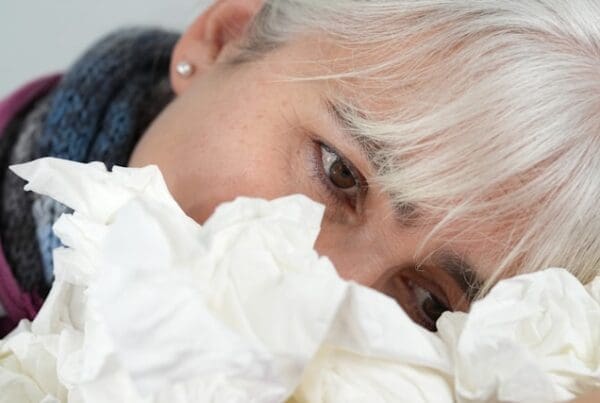

Quick Remedy Finder for Hay Fever & Allergic Rhinitis
The most useful remedy clue is often what happens first when the allergen reaches you: does the nose pour, do the eyes burn, does sneezing explode, does the palate itch, or does the nose simply block up dry?
- Allium cepa – Profuse acrid, watery nasal discharge that makes the upper lip raw, with frequent sneezing and comparatively bland tears. Often worse in a warm room and better in cool open air. [1]
- Euphrasia officinalis – The opposite nose–eye polarity: acrid, scalding tears that irritate the cheeks and lids, while the nasal discharge is comparatively bland. Best considered when the eyes dominate the hay-fever attack. [2]
- Sabadilla – Violent, exhausting paroxysms of sneezing with intense nasal/palatal itching, often triggered by flowers, dry/cold air or temperature change. Warmth and warm drinks tend to help. [3]
- Lycopersicum solanum – A strong whole-archive finding for odour-, dust-, hay- or warm-room-triggered sneezing with acrid watery coryza and intense tickling high in the nose; cool open air relieves. [4]
- Sticta – The hay-fever attack starts dry and blocked rather than streaming: the nose feels completely plugged, repeated blowing produces nothing and pressure builds at the root of the nose. Relief comes when a bland discharge finally starts. [5]
- Wyethia helenoides – Dry, burning itch of the soft palate and posterior nose before much discharge appears, with repeated swallowing or trying to reach the itch with the tongue. Dry heated air, dust and voice use aggravate. [6]
- Ambrosia artemisiifolia – Intense outdoor pollen-triggered nose-and-eye attacks: explosive sneezing, watery excoriating coryza, burning/itching eyes and clear worsening on dry windy pollen days or around grass cutting/fields. [7]
Additional differentials: Arundo donax when itching of the nose, palate, ears and inner canthi is more constant than spasmodic; Sulphur iodatum for burning pollen catarrh with raw canthi and a broader hot/skin/glandular pattern; Naphthalinum when perfume, smoke or chemical odours trigger hay-fever-like coryza with a stronger wheezy/chest edge; Bacillus No. 10 when chronic allergic rhinitis sits alongside eczema, gut disturbance or a broader atopic pattern; and Culex musca when heat-reactive nasal itching/sneezing alternates with hives or wheals. [8][9][10][11][12]
Hay fever and allergic rhinitis: the same allergy family, but not always the same calendar
Hay fever usually means pollen-triggered seasonal allergic rhinitis. Allergic rhinitis is the broader term and can also be driven by house-dust mites, mould spores or animal dander, so symptoms may continue outside pollen season. [14][20]
Typical symptoms include sneezing, a clear runny or blocked nose, itching of the nose/palate/throat, red itchy watery eyes, post-nasal drip, reduced smell, sinus pressure, tiredness and sometimes cough or asthma symptoms. [13][20]
That is why this article intentionally combines the adult master topics Hay Fever + Allergic Rhinitis + Seasonal Allergies into one pillar guide. Publishing three near-identical adult pages would create unnecessary overlap. Children’s hay fever remains a separate future guide because the audience and management questions are genuinely different.
What hits first when pollen reaches you?
Instead of beginning with a long list of allergens, remember the first dominant reaction. It often gives more useful practical and homeopathic information than the final symptom picture after several hours.
- The nose streams first: ask whether the discharge is acrid or bland, and whether warm rooms or open air change it. Allium cepa and Lycopersicum become important comparisons. [1][4]
- The eyes burn first: acrid tearing with a comparatively bland nose strongly raises Euphrasia. [2]
- Sneezing explodes first: Sabadilla is more spasmodic and itch-driven; Ambrosia more directly tied to outdoor pollen exposure; Lycopersicum especially reacts to odours, dust and warm rooms. [3][4][7]
- The palate/posterior nose itches first: Wyethia is dry and early, while Arundo is more chronic and constantly itchy. [6][8]
- The nose blocks dry first: Sticta is much more about obstruction, pressure and futile blowing than about a torrent of mucus. [5]
This “first reaction” approach also makes it easier to track whether treatment is genuinely changing the allergy pattern rather than simply sedating or drying the final symptoms.
Interactive Hay Fever Remedy Finder
The finder starts with the first symptom—streaming nose, burning eyes, sneeze bursts, palate itch, dry blockage or environmental triggers—then checks discharge polarity, warmth/cool-air response, lids, skin/gut associations and other distinguishing source features.
When the nose streams: Allium cepa and Lycopersicum
Allium cepa – acrid nose, bland eyes
Allium cepa has one of the clearest hay-fever pictures in the archive: profuse watery nasal discharge that is acrid enough to excoriate the nostrils and upper lip. Sneezing is frequent and entering a warm room aggravates; cool open air usually brings relief. [1]
The eyes can water profusely, but the tears are relatively bland. This nose–eye polarity is the quickest comparison with Euphrasia, where the tears are the acrid part.
Lycopersicum solanum – odours, dust and hay set it off
Lycopersicum was one of the strongest unexpected results in the complete 487-remedy search. It has violent sneezing on waking or entering warm rooms, acrid watery coryza, burning/raw nostrils and an intense tickling high in the nose. [4]
Odours, kitchen vapours, perfume-like stimuli, dust and hay can provoke attacks; cool open air relieves. Compared with Allium, the environmental/odour trigger is more striking. Compared with Naphthalinum, Lycopersicum remains more purely nose-centred and less chest/toxicological.
When the eyes dominate: Euphrasia
Euphrasia officinalis – scalding tears, comparatively bland nose
Euphrasia belongs near the top when the eyes—not the nose—are the part the person cannot ignore. Tears are acrid, burning and scalding, the conjunctiva and lids may be red/swollen, light feels uncomfortable and there can be a sand-like eye sensation. [2]
The nasal discharge is comparatively bland. Open air and closing/covering the eyes can help, while indoor conditions, wind and bright light aggravate.
The practical distinction is memorable:
- Allium cepa: acrid nose, bland tears.
- Euphrasia: bland nose, acrid tears.
When sneezing and itching dominate: Sabadilla and Ambrosia
Sabadilla – the exhausting sneeze attack
Sabadilla is not ordinary repeated sneezing. The source describes violent prolonged paroxysms that exhaust the person, with intense itching in the nose and palate, constant rubbing and a strong sensitivity to flowers, cold/dry air and temperature changes. [3]
A throat/palate tickle, sensation of a lump/thread and repeated swallowing can accompany. Warm rooms, wrapping up and warm drinks are more relieving here—an important contrast with Allium/Lycopersicum, which generally prefer cooler open air.
Ambrosia artemisiifolia – intense pollen-field nose-and-eye reaction
Ambrosia is highly pollen-centred in the source: slight exposure can produce paroxysmal sneezing, profuse watery excoriating coryza and intensely itchy/burning watery eyes. [7]
Dry windy pollen days, fields, dust and grass cutting aggravate; cleaner allergen-reduced indoor air and cool washing soothe. The source is written around ragweed, so in a UK consumer article the useful principle is the clear outdoor-pollen exposure pattern, not an assumption that ragweed is the person’s allergen.
When itching starts high in the palate: Wyethia and Arundo
Wyethia helenoides – dry palatal itch before the coryza
Wyethia is particularly distinctive at the very beginning of a hay-fever episode. The posterior nares and soft palate burn and itch while there is still little discharge. The person keeps swallowing, sipping or trying to scrape/reach the itch with the tongue. [6]
Dry heated air, dust, talking and early pollen exposure aggravate. Moist air, small sips and resting the voice help. Sabadilla is more violently sneezy and watery; Wyethia is drier and more specifically seated in the posterior nose/palate.
Arundo donax – constant itch across nose, palate, ears and eyes
Arundo has a more persistent mucosal-irritation picture: itching inside the nose, at the inner canthi, soft palate and sometimes ears, with alternating obstruction and fluent discharge. [8]
Warm rooms, spring and damp weather changes aggravate, while open air and freer discharge help. Compared with Sabadilla, the itching is more constant and less explosively spasmodic.
When the nose is dry and completely blocked: Sticta
Sticta – pressure, obstruction and nothing to blow out
Sticta is important because not every allergy starts with watery discharge. Its early hay-fever picture is dry obstruction of the nose/posterior nares with pressure at the root of the nose and repeated futile attempts to blow the nose. [5]
Warm dry confined rooms, lying down and night aggravate; cool moving air helps. A useful turning point is that the person feels better once a bland discharge finally starts.
Wyethia is also dry, but its centre is the unreachable palatal/posterior itch. Sticta is much more “plugged and pressurised”.
Additional remedy patterns when the case does not fit neatly
Sulphur iodatum – burning pollen catarrh with skin/glandular clues
Sulphur iodatum has acrid burning coryza, sneezing, smarting tears and raw canthi, often aggravated by flowers, hay, dust and warm rooms. [9] It becomes more interesting when the broader case also contains heat, acne/skin trouble, adenoidal/tonsillar or glandular tendencies.
Naphthalinum – perfume/smoke-triggered coryza with a chest edge
Naphthalinum has explosive sneezing and watery excoriating coryza from perfume, smoke, coal-tar/mothball-type odours and warm rooms, relieved by cool/open air. [10] Its source extends much more strongly into wheezing/asthmatic and toxicological features, which is why it remains a narrower differential for a simple hay-fever article.
Bacillus No. 10 – allergic rhinitis inside an atopic gut–skin pattern
Bacillus No. 10 includes sneezing fits, itchy nose/palate and watery allergic rhinitis linked with pollen, dust or animal dander, but its real value is the terrain around the allergy: eczema/skin reactivity, gut disturbance and broader chronic atopy. [11]
Culex musca – heat-reactive hay fever alternating with hives
Culex has itchy sneezing/catarrh that is worse warm rooms/bed and better cold/open moving air, but the unusual clue is alternation with wheals or urticaria: as the nose settles, the skin may become the more reactive surface and vice versa. [12]
Build a “pollen firewall” before symptoms peak
The NHS recommends practical exposure reduction when pollen counts are high: petroleum jelly around the nostrils, wraparound sunglasses, showering/changing clothes after outdoor exposure, keeping windows and doors shut where practical, damp dusting and avoiding drying clothes outdoors. [13]
A useful routine is:
- Before going out: check pollen conditions, apply a nasal barrier balm/petroleum jelly and use wraparound glasses if eyes are a major problem.
- While outside: avoid grass cutting and prolonged exposure on very high-pollen days where possible.
- On coming home: change outer clothing, wash face/hair if heavily exposed and keep pollen-covered clothes out of the bedroom.
- At home: damp-dust rather than dry-dust, vacuum regularly and avoid directing outdoor pollen through open bedroom windows during high-count periods.
These measures do not eliminate allergy, but they reduce the allergen load that medication, self-care and the body’s own control mechanisms have to deal with. [20]
Saline nasal rinsing: probably the best-supported low-risk home remedy
Salt-water rinsing physically removes pollen, mucus and inflammatory material from the nasal surface. The NHS includes saline sprays/rinses among self-care options for allergic rhinitis. [14]
A Cochrane review found saline irrigation may reduce patient-reported allergic-rhinitis severity versus no saline, although the evidence was low/very-low certainty because studies were small and heterogeneous. [21]
Use it sensibly:
- use a pharmacy saline product or a correctly prepared solution;
- use sterile/distilled water or water that has been boiled and cooled when preparing a rinse—not untreated tap water;
- clean the bottle/neti device properly;
- do not share devices;
- stop if it causes persistent ear pressure, bleeding or significant irritation.
Current NCCIH guidance also identifies nasal saline as one of the more evidence-supported complementary approaches for seasonal allergy symptoms. [22]
Antihistamines and nasal steroid sprays: use the right tool for the dominant symptom
Antihistamines are particularly useful for histamine-driven symptoms such as sneezing, itching, runny nose and itchy/watery eyes. Non-drowsy options such as cetirizine, fexofenadine or loratadine are generally preferred when daytime alertness matters. [15]
For persistent/moderate-to-severe nasal symptoms—especially congestion—intranasal corticosteroids are a mainstay. The updated ARIA-EAACI 2024–2025 guidance favours intranasal corticosteroids over intranasal antihistamine alone, and fixed intranasal antihistamine + steroid combinations can be more effective than either component alone in suitable cases. [16]
ARIA Part II also recommends intranasal corticosteroids over oral antihistamines overall for allergic rhinitis, while oral second-generation antihistamines remain useful based on symptom pattern and preference. [17]
Technique and regularity matter. A nasal steroid used inconsistently or sprayed badly may look “ineffective” when the real problem is delivery. The NHS advises gentle nose blowing first, head slightly forward, bottle upright and regular use according to the product instructions. [14]
Do not let decongestant spray become the next problem
Short-term decongestant sprays can feel dramatically effective when the nose is blocked, but overuse can create rebound congestion. The current NHS allergic-rhinitis page says decongestant nasal sprays should not be used for longer than 5 days. [14]
If you repeatedly “need” a decongestant to breathe, that is a sign to improve the underlying rhinitis plan—usually regular anti-inflammatory treatment, trigger reduction and proper assessment—rather than continuously extending the decongestant.
Probiotics: promising, but “a probiotic” is not one treatment
The gut–immune connection makes probiotics attractive in allergic disease, but products differ enormously.
A 2025 network meta-analysis of 31 randomised trials involving 2,544 people found improvements in several allergic-rhinitis outcomes, with different probiotic categories ranking differently for nasal symptoms, quality of life and IgE measures. [23]
That sounds encouraging, but it does not mean any supermarket multi-strain capsule has the same evidence. NCCIH similarly describes the evidence as limited/inconsistent and formulation-dependent. [22]
Practical conclusion: probiotics are a reasonable optional adjunct, especially when there is a broader gut/allergy story, but they should not replace nasal treatment or be sold as a generic hay-fever cure.
Vitamin D: correct deficiency, but do not megadose for pollen
Vitamin D status has been studied extensively in allergic disease. A 2025 systematic review/meta-analysis of randomised trials found the overall effect of vitamin D supplementation on allergic-rhinitis symptom scores was not statistically significant across all studies, with high heterogeneity; some subgroups appeared to benefit more. [24]
That makes the sensible approach:
- maintain adequate vitamin D for general health;
- test/correct deficiency when clinically appropriate;
- do not assume high-dose vitamin D is an antihistamine substitute.
In a UK setting, vitamin D may still deserve attention for seasonal/general nutritional reasons—but that is different from claiming it directly treats every case of hay fever.
Polyphenols, quercetin and curcumin: interesting adjuncts, still not first-line
A 2025 systematic review/meta-analysis of 13 randomised trials (823 participants) found polyphenolic compounds produced some improvements in allergic-rhinitis nasal symptoms, particularly seasonal disease, but the certainty of evidence was rated low to very low and quality-of-life effects were not clearly significant. [25]
Quercetin
A small double-blind trial in 66 adults with pollinosis found a quercetin-containing supplement improved some eye/nose symptom and quality-of-life measures over four weeks. [26] Useful signal, but not enough to prescribe quercetin to everybody with hay fever.
Food sources of quercetin/polyphenols—onions, apples, berries, leafy vegetables and tea—can simply form part of a varied diet without turning food into medication.
Curcumin
A randomised double-blind trial in 241 people with perennial allergic rhinitis found oral curcumin improved sneezing, rhinorrhoea and nasal airflow/congestion over two months. [27]
This is promising, but it was a specific oral preparation. Culinary turmeric cannot be assumed to reproduce the same exposure, and curcumin supplements can interact with medicines or aggravate some gastrointestinal/biliary problems.
Butterbur: a herb with efficacy signals and a safety problem
Butterbur is one of the few herbs with human hay-fever trials, and some preparations have shown symptom benefit. But this is not enough to make it a casual self-care recommendation.
The plant naturally contains pyrrolizidine alkaloids (PAs), which can damage the liver and lungs and may be carcinogenic. NCCIH says only products processed and certified/labeled PA-free should even be considered, and safety uncertainties remain. [28]
People sensitive to ragweed/chrysanthemum/daisy-family plants may also react to butterbur. For a self-help article, the risk–benefit profile is therefore very different from saline irrigation or simply reducing pollen exposure.
Local honey: an appealing theory, but not proven hay-fever immunotherapy
The idea sounds plausible: eat local pollen in honey and “train” the immune system. The problem is that the pollens carried into honey are not reliably the same wind-borne grass/tree/weed pollens causing the allergy, and the dose is not standardised.
NCCIH concludes there is no convincing scientific evidence that honey relieves seasonal allergies. [22]
Honey is fine as a food for most adults, but it should not be confused with medical allergen immunotherapy, where the causative allergen is identified and delivered in a controlled dose under specialist guidance.
Spirulina and stinging nettle: small signals, not equal certainty
Spirulina
A randomised trial comparing spirulina with cetirizine in 53 people reported improvements in rhinorrhoea, obstruction and reduced smell in the spirulina group, and an earlier placebo-controlled trial also reported symptom benefit. [30]
The evidence base is still small, so spirulina belongs behind established care rather than being described as equivalent to guideline-recommended treatment.
Stinging nettle
Stinging nettle is frequently promoted for hay fever, but a randomised placebo-controlled trial found symptoms improved in both nettle and placebo groups and did not establish convincing superiority for the main clinical symptoms. [29]
This is exactly why every herb deserves its own evidence check rather than being included simply because it appears on natural-remedy lists.
There is no evidence-based “hay-fever diet”
A varied diet with adequate protein, vegetables, fruit, whole grains and healthy fats supports general health, but there is no established elimination diet that reliably switches off pollen allergy.
Be cautious about unnecessarily restrictive “low-histamine”, dairy-free or gluten-free diets unless there is a separate clinical reason for them. Removing multiple foods can create nutritional problems without reducing pollen exposure.
One food-related issue is genuinely connected to pollen allergy: Pollen Food Syndrome (oral allergy syndrome). Some pollen-sensitised people develop rapid itching/tingling of the mouth or throat with certain raw fruits, vegetables or nuts because pollen antibodies cross-react with related plant proteins. [31]
If reactions are more than mild oral symptoms—especially with nuts, soya, breathing symptoms or systemic reactions—do not assume it is harmless pollen-food syndrome; seek allergy assessment.
When standard treatment is not enough: allergen immunotherapy
For people with severe allergic rhinitis that remains poorly controlled despite appropriate medication and trigger management, allergen immunotherapy can change the immune response to a confirmed trigger rather than simply suppressing symptoms.
BSACI states that immunotherapy is effective for grass- and tree-pollen hay fever and house-dust-mite allergic rhinitis. It is considered when first-line pharmacotherapy gives only partial or inadequate control and symptoms significantly affect quality of life. [19]
In the UK it may be given by subcutaneous injection (SCIT) or sublingual treatment (SLIT), and BSACI describes a typical treatment duration of around three years. It requires specialist assessment and evidence that the suspected allergen really is driving the rhinitis.
Hay fever and asthma belong in the same conversation
Allergic rhinitis is associated with asthma, and uncontrolled nasal allergy can make lower-airway symptoms harder to manage. BSACI describes allergic rhinitis as a risk factor for asthma, while Allergy UK advises particular attention when hay fever is accompanied by wheeze, chest tightness or breathlessness. [18][20]
If you already have asthma, continue your prescribed preventer/reliever plan. Do not replace inhalers with homeopathy, herbs or supplements.
New significant wheezing, chest tightness, breathlessness or rapidly worsening respiratory symptoms need appropriate medical assessment. This is also why Naphthalinum’s strong chest/wheeze edge is treated as a narrower homeopathic differential rather than a reason to self-manage breathing difficulty.
Hay fever or a cold?
Both can cause sneezing and a runny or blocked nose, but the pattern is different. NHS guidance notes that hay fever can last for weeks or months, whereas a typical cold usually settles in about 1–2 weeks. [13]
Features favouring allergy include:
- repeated seasonal recurrence;
- strong itching of eyes/nose/palate;
- clear watery discharge;
- symptoms linked to pollen, animals, dust or a particular environment;
- no infectious-feeling progression.
Fever, body aches, sore throat that evolves over days, known exposure to respiratory infection and an illness that simply runs its course are more consistent with infection—although overlap can occur.
When to get help
See a pharmacist or GP if hay fever/allergic rhinitis is disrupting sleep, school/work or daily life despite correctly used over-the-counter treatment, if the trigger is unclear, or if symptoms occur throughout the year and need proper assessment. [14]
Seek earlier medical help if you develop significant wheeze, chest tightness, breathing difficulty, severe facial/sinus pain, recurrent nosebleeds, persistent one-sided nasal blockage or another symptom that does not fit an ordinary allergy pattern.
A sudden severe allergic reaction with throat/tongue swelling, severe breathing difficulty, collapse or widespread systemic symptoms is not “bad hay fever” and requires emergency treatment.
Frequently Asked Questions
What is the best homeopathic remedy for hay fever?
There is no single best remedy. Allium cepa suits acrid streaming nasal discharge with bland tears; Euphrasia the opposite eye-dominant polarity; Sabadilla violent itchy sneezing; Lycopersicum odour/dust/hay-triggered attacks; Sticta dry blocked onset; Wyethia dry palatal/posterior itch; and Ambrosia intense outdoor pollen-triggered nose-and-eye attacks. [1][2][3][4][5][6][7]
Can I use a decongestant spray for hay fever?
Only short term. The current NHS allergic-rhinitis guidance says decongestant nasal sprays should not be used longer than 5 days because overuse can worsen/rebound nasal blockage. [14]
Does vitamin D help hay fever?
Evidence is mixed. A 2025 meta-analysis did not find a statistically significant overall effect across all trials, although some subgroups may benefit. Correcting genuine vitamin-D deficiency makes sense; megadosing specifically for hay fever does not. [24]
Does local honey cure hay fever?
No convincing evidence shows that local honey relieves seasonal allergy symptoms. Honey does not provide the controlled, identified allergen dose used in medical immunotherapy. [22]
Is butterbur a good natural antihistamine?
Some butterbur extracts have shown benefit, but the herb contains pyrrolizidine alkaloids that can damage the liver/lungs and may be carcinogenic. NCCIH says only PA-free processed products should even be considered, and safety uncertainties remain. [28]
Can hay fever make my mouth itch when I eat fruit?
Yes. Pollen Food Syndrome can cause rapid tingling/itching of the mouth or throat with certain raw fruits, vegetables or nuts because pollen antibodies cross-react with similar plant proteins. Severe or atypical reactions need allergy assessment. [31]
When should I ask about immunotherapy?
Ask about specialist assessment when allergic rhinitis is severe, a specific allergen clearly drives it, and correctly used standard medication/avoidance measures still do not control symptoms or quality-of-life impact. [19]
When your allergy has a recognisable pattern every year
For many people, the most useful clues are remarkably consistent from season to season: acrid nose/bland eyes, scalding eyes/bland nose, violent sneeze–itch attacks, dry blocked onset, unreachable palate itch, odour-triggered coryza, or a wider gut–skin atopic pattern.
If several remedy pictures overlap, the allergy is persistent rather than seasonal, standard treatment is not controlling symptoms, or hay fever sits alongside asthma, eczema, hives or digestive issues, a consultation can look at the wider individual pattern while appropriate allergy treatment continues.
References
- Qandil, I. (n.d.) ‘Allium cepa’, IQ Homeopathy. Available at: https://www.iqhomeopathy.com/materia-medica/allium-cepa/ (Accessed: 25 August 2026).
- Qandil, I. (n.d.) ‘Euphrasia officinalis’, IQ Homeopathy. Available at: https://www.iqhomeopathy.com/materia-medica/euphrasia-officinalis/ (Accessed: 25 August 2026).
- Qandil, I. (n.d.) ‘Sabadilla’, IQ Homeopathy. Available at: https://www.iqhomeopathy.com/materia-medica/sabadilla/ (Accessed: 25 August 2026).
- Qandil, I. (n.d.) ‘Lycopersicum solanum’, IQ Homeopathy. Available at: https://www.iqhomeopathy.com/materia-medica/lycopersicum-solanum/ (Accessed: 25 August 2026).
- Qandil, I. (n.d.) ‘Sticta’, IQ Homeopathy. Available at: https://www.iqhomeopathy.com/materia-medica/sticta/ (Accessed: 25 August 2026).
- Qandil, I. (n.d.) ‘Wyethia helenoides’, IQ Homeopathy. Available at: https://www.iqhomeopathy.com/materia-medica/wyethia-helenoides/ (Accessed: 25 August 2026).
- Qandil, I. (n.d.) ‘Ambrosia artemisiifolia’, IQ Homeopathy. Available at: https://www.iqhomeopathy.com/materia-medica/ambrosia-artemisiifolia/ (Accessed: 25 August 2026).
- Qandil, I. (n.d.) ‘Arundo donax’, IQ Homeopathy. Available at: https://www.iqhomeopathy.com/materia-medica/arundo-donax/ (Accessed: 25 August 2026).
- Qandil, I. (n.d.) ‘Sulphur iodatum’, IQ Homeopathy. Available at: https://www.iqhomeopathy.com/materia-medica/sulphur-iodatum/ (Accessed: 25 August 2026).
- Qandil, I. (n.d.) ‘Naphthalinum’, IQ Homeopathy. Available at: https://www.iqhomeopathy.com/materia-medica/naphthalinum/ (Accessed: 25 August 2026).
- Qandil, I. (n.d.) ‘Bacillus No. 10’, IQ Homeopathy. Available at: https://www.iqhomeopathy.com/materia-medica/bacillus-no-10/ (Accessed: 25 August 2026).
- Qandil, I. (n.d.) ‘Culex musca’, IQ Homeopathy. Available at: https://www.iqhomeopathy.com/materia-medica/culex-musca/ (Accessed: 25 August 2026).
- NHS (2024, current 2026) ‘Hay fever’. Available at: https://www.nhs.uk/conditions/hay-fever/ (Accessed: 25 August 2026).
- NHS (2026) ‘Allergic rhinitis’. Available at: https://www.nhs.uk/conditions/allergic-rhinitis/ (Accessed: 25 August 2026).
- NHS (2023, current 2026) ‘Antihistamines’. Available at: https://www.nhs.uk/medicines/antihistamines/ (Accessed: 25 August 2026).
- Sousa-Pinto, B. et al. (2026) ‘Allergic Rhinitis and Its Impact on Asthma (ARIA)-EAACI Guidelines-2024-2025 Revision: Part I—Guidelines on Intranasal Treatments’, Allergy, 81(4), pp.954–976. doi:10.1111/all.70131.
- ARIA-EAACI Guideline Group (2026) ‘Allergic Rhinitis and Its Impact on Asthma (ARIA)-EAACI Guidelines-2024-2025 Revision: Part II—Guidelines on Oral and Ocular Treatments’, Allergy. PMID:41877472.
- Scadding, G.K. et al. (2017) ‘BSACI guideline for the diagnosis and management of allergic and non-allergic rhinitis (Revised Edition 2017)’, Clinical & Experimental Allergy, 47(7), pp.856–889.
- British Society for Allergy & Clinical Immunology (2026) ‘Immunotherapy’. Available at: https://www.bsaci.org/resources/allergy-management/immunotherapy/ (Accessed: 25 August 2026).
- Allergy UK (2026) ‘Hay Fever and Allergic Rhinitis’. Available at: https://www.allergyuk.org/about-allergy/types-of-allergies/hayfever/ (Accessed: 25 August 2026).
- Head, K. et al. (2018) ‘Saline irrigation for allergic rhinitis’, Cochrane Database of Systematic Reviews, CD012597. doi:10.1002/14651858.CD012597.pub2.
- National Center for Complementary and Integrative Health (2026) ‘Seasonal Allergies and Complementary Health Approaches’. Available at: https://www.nccih.nih.gov/health/providers/digest/seasonal-allergies-and-complementary-health-approaches (Accessed: 25 August 2026).
- Lu, C. et al. (2025) ‘Efficacy of different probiotic regimens for allergic rhinitis: A network meta-analysis’, Complementary Therapies in Clinical Practice, 59, 101954. doi:10.1016/j.ctcp.2025.101954.
- Kawada, K. et al. (2025) ‘Vitamin D Supplementation and Allergic Rhinitis: A Systematic Review and Meta-Analysis’, Medicina, 61(2), 355. doi:10.3390/medicina61020355.
- Lai, Y-R. et al. (2025) ‘Clinical Effects of Polyphenolic Compounds on Allergic Rhinitis: A Systematic Review and Meta-Analysis’, Journal of Allergy and Clinical Immunology: In Practice, 13(9), pp.2475–2491.e16. doi:10.1016/j.jaip.2025.06.032.
- Yamada, S. et al. (2022) ‘Effects of repeated oral intake of a quercetin-containing supplement on allergic reaction: a randomized, placebo-controlled, double-blind parallel-group study’. PMID:35776034.
- Wu, S. et al. (2016) ‘Effect of curcumin on nasal symptoms and airflow in patients with perennial allergic rhinitis’, Annals of Allergy, Asthma & Immunology. PMID:27789120.
- National Center for Complementary and Integrative Health (2026) ‘Butterbur: Usefulness and Safety’. Available at: https://www.nccih.nih.gov/health/butterbur (Accessed: 25 August 2026).
- Bakhshaee, M. et al. (2017) ‘Efficacy of Supportive Therapy of Allergic Rhinitis by Stinging Nettle (Urtica dioica) root extract: a Randomized, Double-Blind, Placebo-Controlled Clinical Trial’, Iranian Journal of Pharmaceutical Research. PMID:29844782.
- Cingi, C. et al. (2020) ‘Clinical comparison of the efficacy of Spirulina platensis and cetirizine for treatment of allergic rhinitis’. PMID:32773785.
- British Society for Allergy & Clinical Immunology (2022, current 2026) ‘Diagnosis and management of Pollen Food Syndrome/Oral Allergy Syndrome’. Available at: https://www.bsaci.org/guidelines-and-standards/bsaci-guidelines/diagnosis-and-management-of-pollen-food-syndrome-oral-allergy-syndrome/ (Accessed: 25 August 2026).